Startup Web Solutions: Turning Your Idea Into a Powerful Platform

Every startup begins with an idea. But an idea only becomes real when people can see it, use it, and trust it. That happens online. Your website is often the first place where a customer, investor, or partner tries to understand who you are and what you offer.
Research shows that over 71% of businesses already have a website. So the question is no longer “Should I be online?” The real question is “How do I build an online presence that actually works?”
This is where startup web solutions play a major role. They combine planning, design, development, and growth tools in one direction. Instead of random pages and guesswork, you work with structured Web Solutions Services that match your stage, your audience, and your goals.
A slow, confusing, or poorly-built site can push people away fast. A smooth and clear site can help users feel confident. The difference affects trust, leads, and sales. If you want to explore more context and examples, you can read our startup-focused insights here.
In this guide, we’ll break down how a simple idea turns into a working online platform. We’ll look at the features that matter, the planning that saves time and money, and the small choices that change how users feel on your site.
If you’re at the starting line, this is your map.
TL;DR
- Understand what startup web solutions really offer and why they’re more than just websites.
- Learn how to go from idea to live platform with speed, clarity, and flexibility.
- Explore real features, design tips, and industry use cases that help your startup grow.
- Avoid waste and delays by choosing the right website development solutions from the start.
Key Points
- Startup web solutions combine planning, design, and technology to build platforms that grow with your business.
- A fast, responsive website creates better trust and reduces bounce especially on mobile.
- Custom builds work better than templates when your product changes or grows.
- Planning your web solution early helps avoid costly rework and keeps your launch on track.
- No-code tools, mobile-first design, and lightweight backend systems are shaping how startups build today.
- A good foundation supports scale, future features, and user experience from the first click.
What Are Startup Web Solutions?
Startup web solutions are not just websites. They are complete systems that help your idea become usable, shareable, and real. These platforms let people sign up, learn, buy, or use your product right from day one.
Think of it like this. A startup doesn’t just need a “home page.” It needs a tool. Something that works while you sleep. Something that explains, collects, sells, or books. All of this starts with the right Web Solutions Services.
These services usually include design, development, testing, hosting, and user experience. But more than that, they are shaped around how startups grow. A startup may change fast. Or add new features. Or shift from free to paid. That’s why the solution must bend and grow with you.
If you’re new to this space, here’s a guide that breaks down what web solutions services include in simple terms.
For startups, the web is not just a channel. It’s the whole product. So the solution has to be lean, fast, and built for change.
Why Your Startup Needs a Tailored Web Solution
Your startup is new, but your users won’t give you extra time. They expect clarity, speed, and trust from the first click.
This is where working with a web solutions company helps. Instead of buying themes or patching things together, you start with a strong base that fits your product and your growth path.
Startups move fast. You may test features, change models, or add partners within weeks. A ready-made website won’t keep up. A tailored solution gives you room to grow, change, and still stay stable.
Also, your platform is your pitch. If it’s messy or slow, people may lose interest. But if it works well, they remember and they come back.
Key Components of an Effective Startup Web Solution
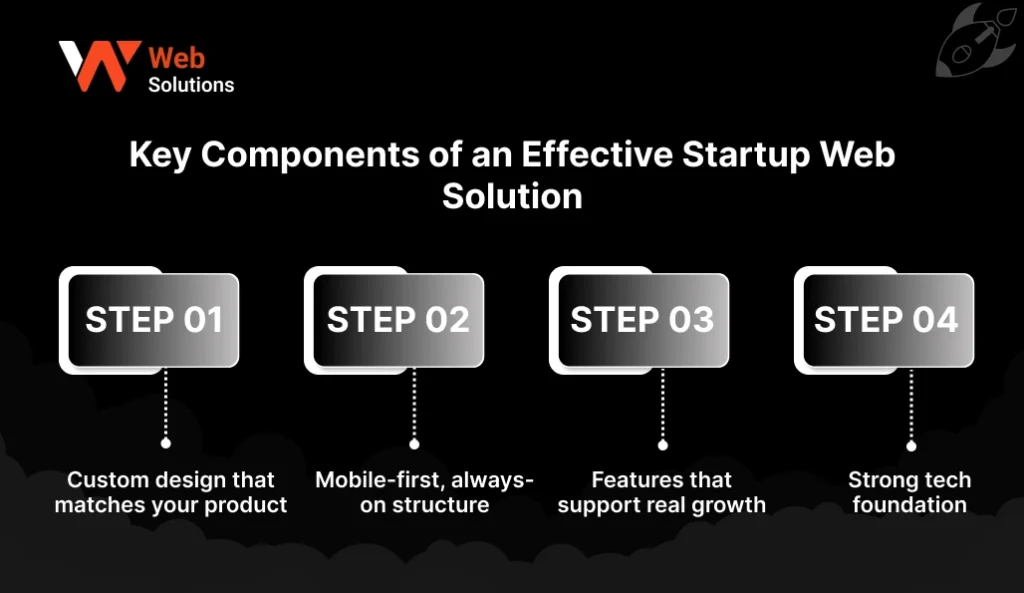
Every startup platform needs more than just good looks. It must work, grow, and adapt as your idea takes shape. Whether you’re building a marketplace, a booking tool, or a software dashboard, the web solution behind it should match your goals, not limit them. That means fast loading, clear design, strong backend, and mobile-first thinking. A solid build here saves you money, earns user trust, and prevents rework down the line.
1. Custom design that matches your product
Every startup has its own story. A fitness app will feel different from a legal services portal, and both need different flows. With custom web solutions, you can control not just the look but the user path. What happens after someone clicks “Start”? What do they see first? Templates can’t answer that. Custom builds can. And if your product evolves, your platform can shift without breaking.
Startups often pivot. When that happens, design changes shouldn’t mean rebuilding everything. Custom builds give you that flexibility. Your web solution becomes part of your product, not just a wrapper around it.
2. Mobile-first, always-on structure
Today, your user is probably not on a laptop. They’re on a phone, in a car, or on a lunch break. If your site doesn’t load well on small screens, it doesn’t matter how good your idea is. Responsive web solutions fix this by adapting to any screen size automatically, no pinching, no sideways scrolling.
And speed matters. Over 53% of mobile users leave if a site takes more than three seconds to load (Think with Google). A mobile-optimized platform reduces bounce, helps SEO, and makes your startup feel legit especially to early users comparing options.
3. Features that support real growth
A startup platform should never be just static text. Think about what actions users need to take. Buy a product? Book a time? Upload a file? Login and view progress? A good web solution includes those flows. For retail or D2C founders, ecommerce web solutions offer payment tools, cart setup, discount rules, and secure checkout.
For service-based startups or SaaS models, user accounts, dashboards, and billing systems can be added early. These tools grow with your needs. You don’t have to add everything at once but your platform should be ready when it’s time.
4. Strong tech foundation
Behind every fast and secure platform, there’s invisible code doing heavy lifting. You don’t have to write it, but you should know it’s there. The backend handles SEO tags, sitemaps, caching, form responses, page load speed, and database backups. This is where many cheap websites fall short; they look fine but fail under pressure.
If you want to see what goes into this structure, check out our website development solutions page. A strong base doesn’t just protect your idea, it makes it easier to grow.
Planning Your Platform – Needs, Budget, and Setup
Startups don’t have time to guess. Every rupee spent early needs to bring real value. That’s why the planning stage of your web solution is more important than people think. Many founders skip this part, jump straight into design, and later find out it doesn’t work as they expected.
First, list what your platform actually needs to do. Is it just an information site? Will it have sign-ups? Will users need logins or dashboards? What will they click on first? These answers shape not only the user journey but also your budget, timeline, and tech stack.
If you’re bootstrapped or working with seed money, you might be looking for affordable web solutions that still feel premium. That’s possible but only with clarity upfront. The more you know about your users and goals, the less money you’ll waste in development rounds.
Startups that invest in early consulting often avoid this trap. A good consultant helps break down your idea into features that matter now, and those you can add later. Here’s a helpful guide on how early advice can help you save time and money with consulting.
Remember, building your startup platform is not just about speed. It’s about building in the right direction from the start.
How to Turn Your Startup Idea Into a Working Platform
Every startup starts with a sketch. Maybe it’s a wireframe on a napkin. Maybe it’s a Google Doc. But how do you take that early version and turn it into something people can actually use?
That’s where startup web solutions make a difference. Instead of throwing money at vague development tasks, you move step by step from defining user needs to building the first version. When done right, each phase supports the next. Nothing feels rushed. Nothing gets rebuilt from scratch.
The first step is to map your core features. What’s your product’s “minimum usable version”? Not the dream version. Just the one that can be launched, tested, and improved. Once that’s clear, you can choose the right stack, layout, and workflow. That’s when web solutions consulting comes in. The right guidance keeps your build lean and future-ready.
You can read more about the role of a web solutions consultant here. They don’t just manage the project, they ask the hard questions that help you avoid common startup mistakes.
Once the plan is in place, your team (or agency) will start building with tools that fit. These might be no-code tools for speed, or full-stack builds for long-term strength. Either way, the focus stays on usability, performance, and growth. This is where website development solutions come into play. They cover both the front-end and back-end making sure everything works, loads fast, and scales smoothly.
The result isn’t just a website. It’s a working product that real users can test, use, and give feedback on. That’s when the startup truly begins.
Benefits of a Well-Built Startup Platform
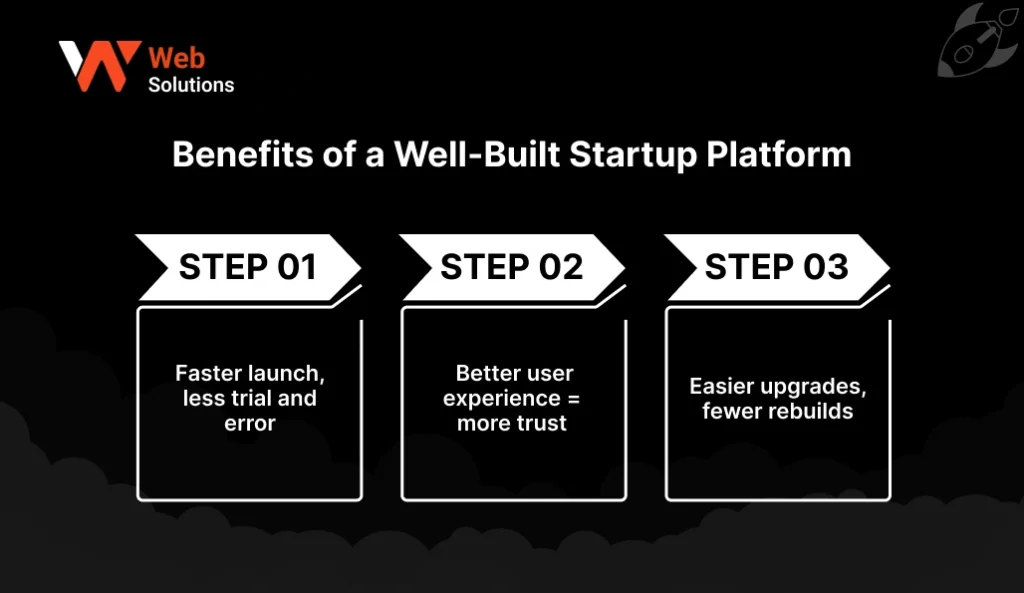
A well-made website is not just a tool. For startups, it’s your first product. When done right, it helps you launch faster, convert better, and stay flexible as you grow. Many early-stage founders skip this part. But investing in strong startup web solutions early can save months of backtracking later. Here’s what you gain with the right build.
1. Faster launch, less trial and error
Startups move fast. If you can test your idea in the real world sooner, you’ll learn faster too. A clear and focused platform helps you launch without bugs, delays, or wasted features. Instead of waiting for a “perfect” version, you get something usable. Users start giving feedback, and you can build based on what they do or what you guessed.
This early launch reduces pressure. You’re not wasting funds fixing broken flows. You’re improving the real thing while it’s live.
2. Better user experience = more trust
A smooth site makes people stay. A slow or clunky one drives them away. Google research shows that if your load time moves from 1 second to 3 seconds, the chance of a user leaving increases by 32% (source).
That kind of drop hurts especially when you’re just starting out. This is where strong web development solutions matter. They focus on speed, layout, and mobile flow from day one. It feels easy to the user. It builds quiet trust.
3. Easier upgrades, fewer rebuilds
Startups change often. Features grow. Plans shift. If your platform is rigid, even small updates feel painful. But with a good foundation, updates are quick. You don’t have to rebuild the whole site just to add one section.
This means lower dev bills, less downtime, and more freedom to adjust. Your tech doesn’t slow you down. It supports the pace your startup needs to keep.
Use Cases Across Different Industries
Not every startup builds the same kind of platform. A clinic won’t need what an online store does. But in every case, the right startup web solutions can help launch faster, stay flexible, and keep costs predictable.
That’s where custom website solutions shine. Instead of forcing your idea into a fixed layout, they shape the platform around your use case. You only build what you need and you can add more later as your business grows.
Here are a few common examples:
- Healthcare – appointment booking, patient portals, HIPAA-safe forms
- Ecommerce – product pages, carts, payments, inventory tools
- Real estate – property listings, map views, contact forms
- Travel – itinerary tools, dynamic pricing, local integrations
- Education – course modules, student logins, progress tracking
- SaaS / Tech – dashboards, account setup, billing workflows
- Social / Community – profile creation, groups, messaging systems
Each of these needs different flows. One-size platforms can’t handle that. But a tailored build can.
Latest Trends in Startup Web Solutions
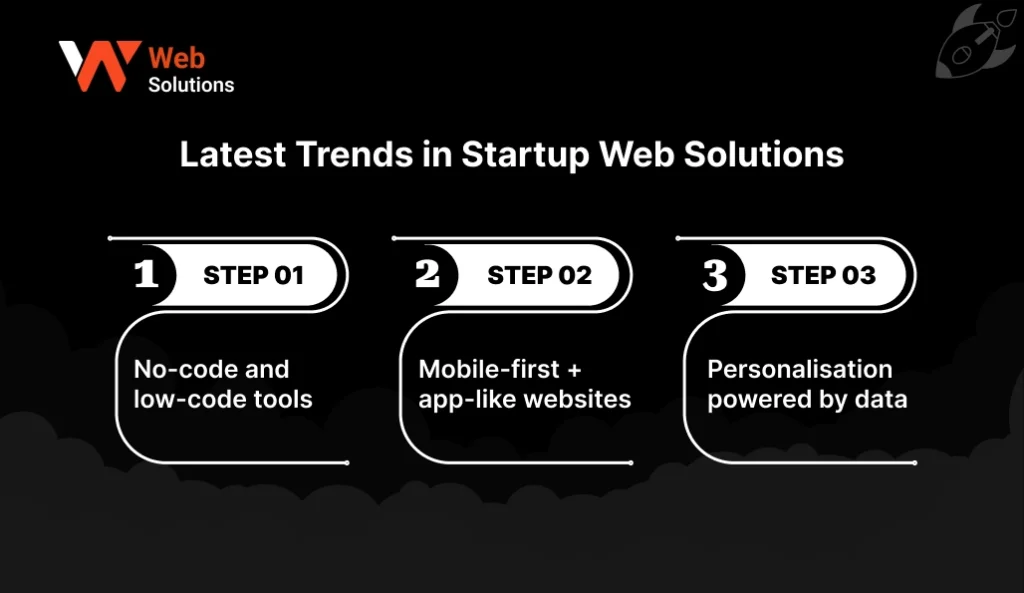
Technology keeps changing. What worked three years ago may feel slow or clunky today. That’s why the best startup web solutions stay updated not just in design but in how they’re built. Startups that follow key trends early often save time, cut dev costs, and impress users with little touches that feel modern.
Here are three trends shaping the future of platform building. If you’re planning ahead, this is where to start.
1. No-code and low-code tools
Startups don’t always need full-stack teams to build their MVPs. No-code tools like Webflow or Bubble now let non-developers create real platforms. Low-code systems also help devs move faster with prebuilt modules. For early-stage founders, these tools offer a fast, cost-effective way to test ideas without getting stuck in technical delays.
But remember they’re good for starting, not always for scaling. Use them smartly.
2. Mobile-first + app-like websites
Most users come through phones, not desktops. So sites that feel like appsquick taps, fast load, smooth transitions are winning attention. Things like Progressive Web Apps (PWAs) make websites feel native without app store downloads. This keeps development simple but user experience sharp.
For lean teams, this means less time building two separate things (site + app).
3. Personalisation powered by data
Smart platforms are learning from user actions. Showing different homepages to repeat visitors. Adjusting pricing blocks based on location. Personalised UX is no longer just for big companies. With light tools and plugins, even early-stage startups can adapt content and design in small ways that improve conversion.
These trends aren’t guessed; they’re already live in many markets. For a deeper look, check our blog on the future of web solutions.
Design, UX, and First Impressions
People judge fast online. Before they read your headline or try your product, they notice the design. If it feels messy, old, or crowded they leave. A recent stat says 38% of users abandon a website if it looks unattractive (source). That’s a lot of lost trust from something that’s fixable.
Good design doesn’t mean fancy. It means clean flow, clear buttons, and easy reading. With strong startup web solutions, design is not a last step; it’s baked into every page. From font size to spacing, from how fast a button reacts to how smooth it feels on mobile it all matters. And it can make or break the first visit.
Overcoming Common Startup Web Challenges
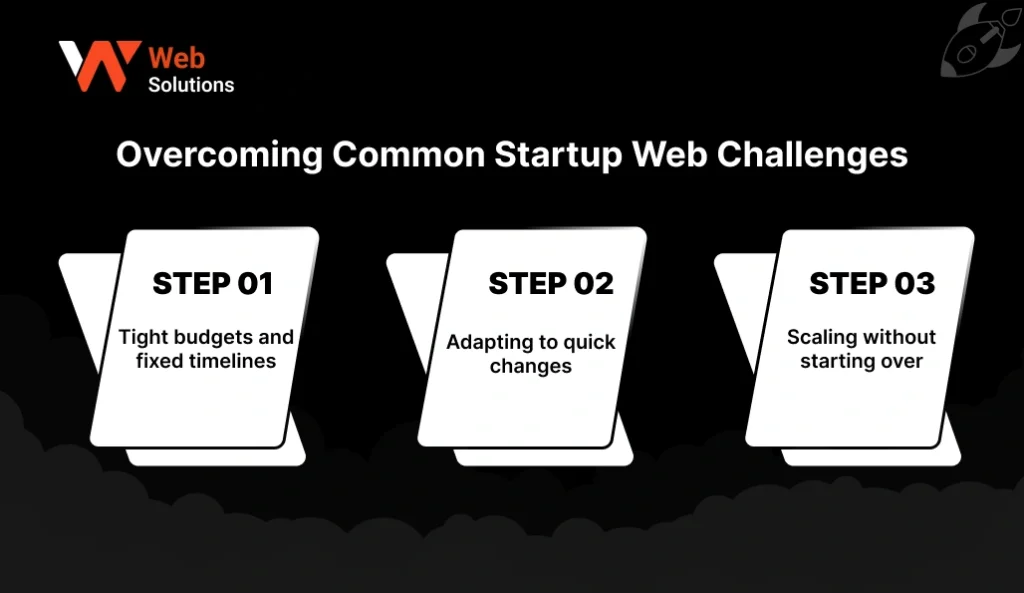
Building a platform sounds exciting until the real-world limits show up. Budget, tech confusion, and shifting ideas can slow you down. But most of these hurdles can be solved early if you pick the right plan. That’s where smart startup web solutions shine. They adjust as you go and protect your time, budget, and energy.
1. Tight budgets and fixed timelines
You don’t have time for multiple rebuilds or surprise bills. When the budget is small, clarity becomes everything. Knowing what features matter now and what can wait helps you build lean. That’s why planning beats rushing. Want to see how others did it? Here’s how custom web solutions help stand out.
2. Adapting to quick changes
Your product may evolve. That’s normal. But if your website can’t keep up, you’ll waste both time and trust. A flexible web solution lets you change copy, add new sections, or shift direction without restarting everything.
3. Scaling without starting over
Early wins are great but what happens when you grow? If your platform wasn’t built with growth in mind, it might crash under pressure. Good solutions let you scale features, handle more users, or expand to new markets without chaos.
Conclusion: Final Take
Startups don’t need perfect websites. They need platforms that work, grow, and stay flexible. That’s what good startup web solutions offer: they match your idea, not force you to fit into a preset layout.
With the right website development solutions, you get speed, structure, and space to test your product in the real world. It’s not about adding fancy features. It’s about building the right ones for now and having the freedom to add more later.
If you’re ready to take the next step, start your project discussion here. No pressure. Just a real plan that fits your stage and budget.
Frequently Asked Questions
1. What is a startup web solution?
It’s a website or platform built for early-stage businesses. It supports fast launches, real-time updates, and future growth.
2. How are startup web solutions different from a basic website?
They’re made for growth, testing, and real use not just to show info. They’re more flexible and often include custom features.
3. Do I need a developer or can I use a website builder?
Builders are fine for early tests. But if you want full control or advanced features, a custom solution works better.
4. What’s the average cost of a startup platform?
A basic version can start around $400–$700 USD. More complex features can raise it to $1,500+, depending on scope.
5. How long does it take to launch a basic startup platform?
With clear planning, most builds take 2–6 weeks. Larger platforms can take longer if more features are needed.
6.Why should I invest in startup web solutions early on?
Because this is your first product. Done well, it builds trust, brings leads, and proves your idea is real.