AI Web Solutions: How AI Is Transforming Modern Websites in 2026
Most people close a slow page in one second. They don’t wait anymore. This is why brands now want smarter websites that load fast, guide users clearly, and adjust on their own. That’s where AI Web Solutions make a real difference in 2026. They help a site feel quick, personal, and helpful without adding extra work for your team.
AI studies how people move on a page. It predicts what they need and fixes issues before anyone complains. It works across speed, layout, content, search, and security. A web solutions company often uses these AI tools to keep websites stable and adaptive. Small businesses use digital web solutions to automate simple tasks. Big companies use enterprise web solutions to personalise journeys. Startups rely on next gen web solutions to scale fast without hiring big teams.
Customers expect clean design, fast answers, and smooth journeys. AI fits this need naturally. It learns, adapts, and keeps your website stable even during busy hours. If you want a simple starting point, you can explore how basic systems work here in our guide on affordable web solutions.
Google’s own research on speed and performance, shared here on Google Web.dev, explains how small delays can impact conversions and user trust. We will use these insights across this blog.
In the sections ahead, you’ll see what AI-powered tools can do, why more companies are switching, and how these changes shape modern websites in 2026.
TL;DR
- Websites in 2026 need to be fast, smart, and adaptive.
- AI Web Solutions make sites load quicker, guide users better, and learn from behaviour.
- AI improves speed, search, content, UX, and security with less manual work.
- Small teams save time. Large teams improve personalisation. Startups scale faster.
- Google Web.dev research shows speed and stability matter more than ever.
Key Points
- AI Web Solutions help modern websites think and respond like real systems, not static pages.
- AI improves performance by compressing images, cleaning scripts, and reducing layout shifts in real time.
- AI-powered UX tools study how people move on a page and adjust layouts to make browsing easier.
- Smart_search, predictive suggestions, and personalised content flows keep users engaged longer.
- AI chatbots and voice tools cut support time and guide visitors instantly, even during busy hours.
- AI-led security blocks bots, scans threats, and protects customer data round the clock.
What Are AI Web Solutions?
AI Web Solutions are tools that help websites think, learn, and improve on their own. Instead of waiting for a developer to fix things, the system studies user behaviour and updates parts of the site automatically. It helps with speed, layout, search, security, and even content suggestions. This makes your website feel faster, cleaner, and easier to use.
Most businesses use AI to handle the work that usually takes hours. It checks broken pages, improves load time, adjusts images, and guides visitors to the right section. Small brands use custom web solutions to add simple automation. Larger teams use cloud web solutions and AI-powered web design systems to manage high traffic and multiple pages. Startups lean on these tools because they help launch faster and save money.
AI also improves personalisation. It looks at what people click, how long they stay, and what they ignore. Then it shows better content, smarter product suggestions, and more relevant pages. This makes visitors feel understood, which increases conversions.
If you want a deeper look at how basic systems work, here’s a guide on digital web solutions. It explains why businesses now prefer smarter, adaptive websites.
How AI Is Transforming Modern Websites in 2026
Websites in 2026 work very differently from the ones we saw a few years ago. They are faster, smarter, and shaped by real user behaviour. This shift comes from AI Web Solutions, which handle tasks that once needed a full tech team. AI studies how people move on your site, improves load times, fixes errors, and updates pages before anyone notices a problem.
The biggest change is speed. Google’s own research on Core Web Vitals shows that small delays push customers away. AI tools now compress images, clean code, and improve layout shifts in real time. They keep your pages stable and smooth across all screens.
AI also helps with content. It checks which pages work best and suggests what to update, remove, or rewrite. This helps even small teams maintain strong, fresh websites. If you want to explore how smart systems support business growth.
Another shift is personalisation. Websites no longer show the same layout to everyone. AI predicts what a visitor wants, shows better products, adjusts menus, and guides them to the right action. This helps increase conversions and keeps users engaged longer.
Security is stronger too. AI watches for suspicious activity, blocks bots, and prevents attacks faster than manual checks. This matters for businesses that handle payments, logins, or customer information.
Overall, AI brings three upgrades to modern sites: faster performance, better engagement, and stronger protection.
If you want to see how companies use smart systems in real workflows, here’s a helpful breakdown on web solutions consulting.
Key AI Features Modern Websites Use in 2026
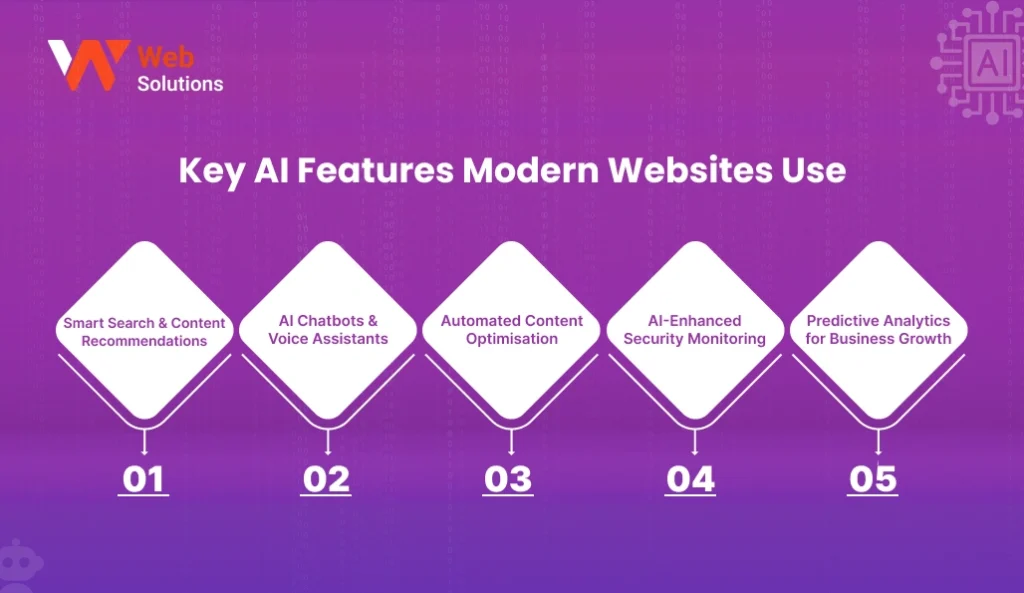
Modern sites feel faster, smarter, and more personal because they use AI Web Solutions running in the background. These tools study user behaviour, pick the right content, and keep pages fresh without extra work from your team. In 2026, these upgrades are no longer optional. They shape how users browse, buy, and trust a brand online.
Related Read: AI web solutions
1. Smart Search & Content Recommendations
Websites now use AI to guide people to what they want faster. These systems study past visits, clicks, and reading patterns. Then they show the right pages, products, and blog topics at the perfect moment. This helps users stay longer and reduces the number of pages they skip.
Related Read: Future of web solutions
AI-driven upgrades include:
- Personalised product or content suggestions based on browsing history.
- Search bars that predict what users want before they finish typing.
- Dynamic page layouts that rearrange content based on user interest.
2. AI Chatbots & Voice Assistants
AI chatbots are now the first helper users meet on most websites. They answer simple questions, guide people to the right page, and give instant support without waiting for human staff. Voice assistants are also growing fast. They help people search, place orders, or check account details using simple voice commands.
What websites use today:
- 24/7 chat support with quick replies.
- Voice-enabled product lookups and FAQs.
- Smart routing that sends complex questions to real staff.
3. Automated Content Optimisation
AI tools now fix content in real time. They update headlines, adjust spacing, and test different layouts to see what users prefer. This makes websites feel smoother, cleaner, and easier to read. Many teams use these tools daily because they cut hours of manual changes. Many sites also follow Google Web.dev performance guidelines to keep pages fast and reliable.
Common AI-led improvements:
- Auto-checking slow pages and fixing layout issues.
- Updating keywords and meta tags based on trends.
- Testing multiple versions of headlines or images.
4. AI-Enhanced Security Monitoring
Online threats grow every year, and AI helps websites stay safe. These systems scan all traffic, block suspicious actions, and protect customer data around the clock. They work faster than manual checks and reduce the chances of site crashes or stolen information. IBM explains this shift clearly in their AI security insights.
Typical security upgrades include:
- Real-time threat detection.
- Automatic blocking of harmful bots.
- Alerts for unusual login or payment activity.
5. Predictive Analytics for Business Growth
AI can now study patterns to help businesses plan better. It shows what users click, where they stop, and which pages bring the most sales. This helps teams improve their website without guessing. Many companies use this data to decide where to invest, what to update, and which features matter most.
What predictive tools help with:
- Tracking user journeys.
- Spotting trends before they rise.
- Finding pages that need improvement.
How AI Improves Website Performance & User Experience in 2026
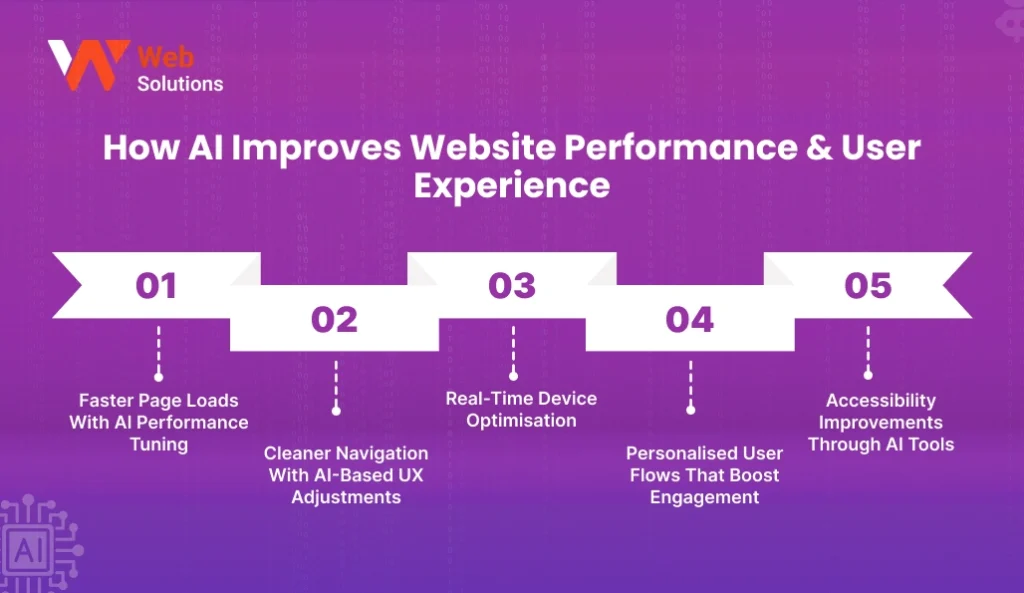
Websites in 2026 feel smoother because AI runs constant checks in the background. It fixes slow pages, adjusts layouts, and guides users without making them think. When everything loads fast and feels simple, visitors stay longer and trust the brand more.
1. Faster Page Loads With AI Performance Tuning
Sites often slow down because of heavy images, scripts, or older layouts. AI tools now scan each page, remove what is not needed, and optimise files automatically. This keeps websites fast even during high traffic. Many brands follow the speed rules shared on Google Web.dev
to maintain smooth loading.
AI improves speed by:
- Compressing large images without losing quality.
- Cleaning unused code and scripts.
- Matching page elements to the user’s device for quicker delivery.
2. Cleaner Navigation With AI-Based UX Adjustments
AI studies how users move through a website. It sees where people click, where they drop off, and which paths feel confusing. Based on this, it rearranges items or suggests changes to make pages easier to browse. If you want to understand why UX matters, check our post on custom web solutions.
AI-enhanced UX tools:
- Adjust menu order based on popular paths.
- Highlight pages that need clearer layouts.
- Suggest size or spacing changes for better readability.
3. Real-Time Device Optimisation
People browse from phones, tablets, laptops, or mixed devices. AI helps websites adjust to each screen instantly. This reduces zooming, scrolling, or misaligned elements that usually frustrate users. Many businesses use this feature as part of their responsive web solutions setup.
What AI changes automatically:
- Layout spacing for small screens.
- Touch-friendly buttons for mobile.
- Image sizing that fits each device.
4. Personalised User Flows That Boost Engagement
AI watches what visitors do on your website and shapes the journey based on their interests. Someone looking at menus gets food options first. Someone checking pricing pages sees cost details sooner. This makes the experience feel natural and reduces the steps needed to find information.
Related Read: Startup web solutions.
Smart personalisation includes:
- Showing top categories based on browsing history.
- Offering shortcuts for returning users.
- Custom landing pages for frequent buyers.
5. Accessibility Improvements Through AI Tools
Accessibility is now a must for modern websites. AI helps check colour contrast, font clarity, and screen-reader issues. It also suggests improvements for people with visual or hearing challenges. This helps brands meet global web standards and offer an inclusive experience.
AI supports accessibility by:
- Detecting missing alt-text.
- Spotting low-contrast elements.
- Improving keyboard navigation and labels.
How AI Reduces Website Development Costs in 2026
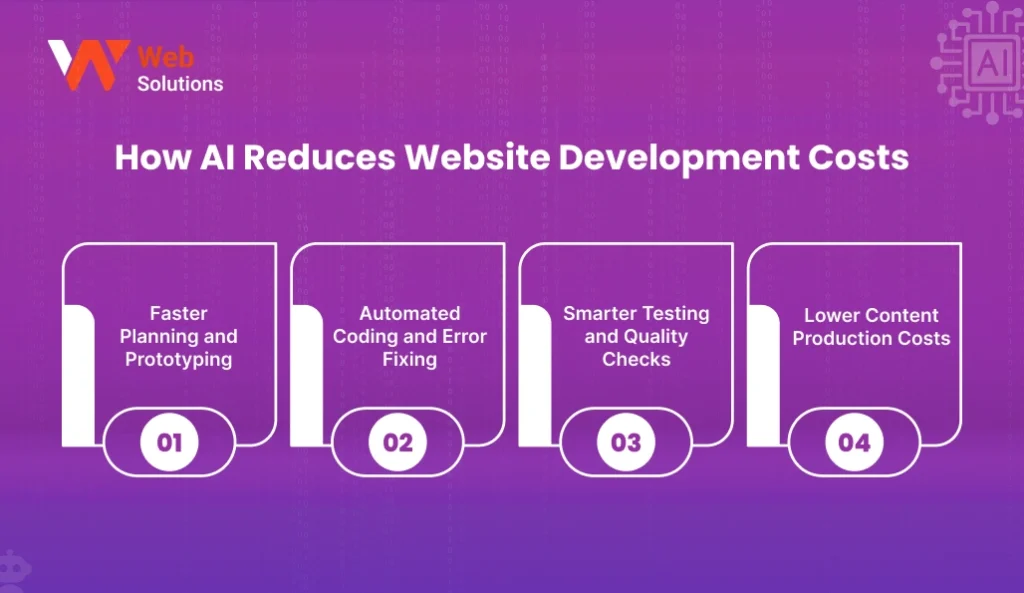
AI cuts development costs by speeding up tasks that once took weeks. It automates planning, design, coding, testing, and content work. This reduces manual hours, lowers agency fees, and helps small businesses launch faster. Most AI tools also follow performance rules from Google Web.dev, so the final website loads fast and stays stable.
1. Faster Planning and Prototyping
AI turns simple inputs into ready wireframes, layout ideas, and user flows. This saves time in the early stages and helps teams see how pages will look before development starts.
AI reduces planning cost by:
- Auto-creating wireframes.
- Suggesting page layouts.
- Speeding up feedback rounds.
2. Automated Coding and Error Fixing
AI coding tools write functions, fix bugs, and clean messy scripts. This shortens development time and reduces testing hours. It also keeps structure aligned with Google Web.dev performance checks, which helps sites remain fast and stable.
Coding tasks AI simplifies:
- Reusable components.
- Error detection.
- Code clean-up and optimisation.
3. Smarter Testing and Quality Checks
AI testing tools run simulations, spot broken elements, and check how the site behaves on different devices. This removes long manual testing cycles and reduces the cost of fixing issues later.
AI makes testing cheaper by:
- Running automated browser checks.
- Finding hidden UX issues.
- Preventing expensive post-launch fixes.
4. Lower Content Production Costs
Blogs, service pages, product descriptions, and landing pages take time. AI reduces this workload by creating drafts, improving tone, and suggesting keywords. Teams spend less on writers and more on strategy.
AI lowers content costs through:
- Faster draft generation.
- Tone and clarity polishing.
- SEO ideas and structure suggestions.
Conclusion
AI is changing how modern websites work. It helps businesses move from simple pages to smart systems that guide users, respond faster, and support real work behind the scenes. With the right AI web solutions, you get a website that learns from behaviour, improves conversions, and stays fast across all devices. It also cuts manual effort by automating support, content flow, and daily tasks.
As AI tools continue to grow through platforms like Google Web.dev, every industry from real estate to healthcare now expects a smoother, more personalized experience. Your website becomes more than a digital visit. It becomes a living system that adapts to users and supports long-term growth.
FAQs
1. What are AI web solutions?
AI web solutions use artificial intelligence to improve how a website performs, behaves, and interacts with users. They help with smarter search, content suggestions, faster support, security checks, and personalised user journeys. These tools make websites work like intelligent systems instead of static pages.
2. How does AI improve website performance?
AI studies user patterns, detects slow areas, and suggests fixes that boost speed and loading time. It also helps compress images, clean unused scripts, and automate performance checks. You can compare best practices using tools from Google Web.dev.
3. Do small businesses benefit from AI websites?
Yes. Small teams get the biggest advantage because AI reduces manual work. It helps with leads, chat responses, content updates, booking flows, and basic SEO tasks.
4. How much do AI-powered web solutions cost?
Costs depend on the features. Simple AI search or chat tools start low. Full AI automation, dashboards, or custom logic cost more.
5. Can AI integrate with existing websites or CMS platforms?
Yes. AI works with WordPress, Shopify, custom CMS, and most web frameworks. It adds features like smart search, chat automation, product suggestions, and behaviour tracking. A consulting-first approach helps you choose the right mix. For more details, see what are web solutions services.